

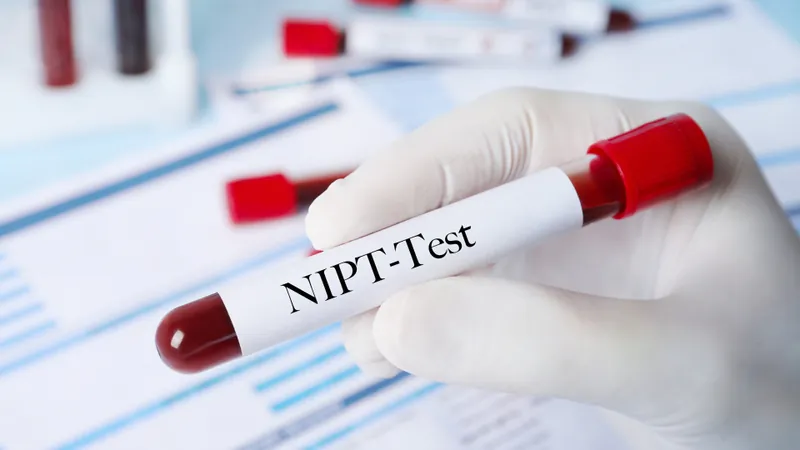
The NIPT test in Nha Trang is a non-invasive prenatal screening service at the Dr. Trung 79 Clinic. NIPT is a test that analyzes the baby’s cell-free DNA found in the mother’s blood, helping to detect early common fetal abnormalities and genetic diseases.
Advantages, benefits and procedure
Key advantages
- Detects genetic abnormalities from week 9 of pregnancy.
- High accuracy > 99.9%.
- Safe – Non-invasive.
- Counseling by a medical genetics specialist.
- Done once – Lifelong peace of mind.
Benefits
- Screens for genetic abnormalities with a single maternal blood test from 9 weeks of pregnancy.
- Accurately detects single-gene disorders that are easily missed during the prenatal period.
- Genetic counseling for expectant mothers to proactively care for the baby throughout pregnancy.
Procedure
- Pre-test counseling.
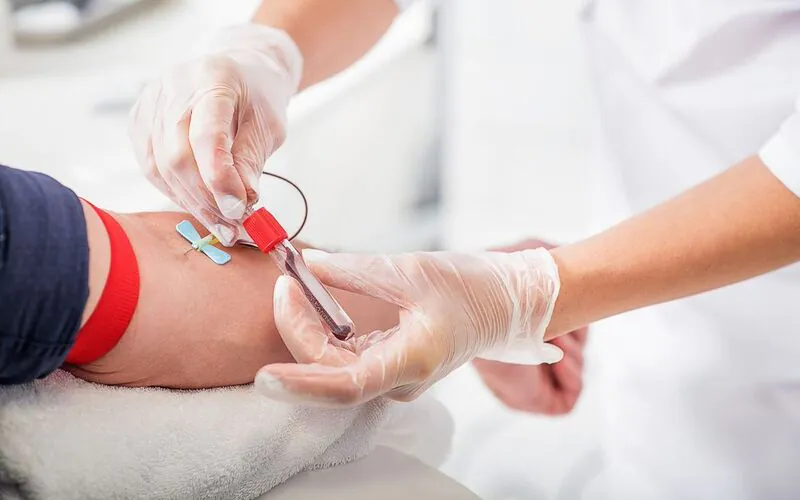
- Collect 7-10 ml of maternal blood in a specialized tube and extract cell-free DNA.
- Sequence the cell-free DNA using deep-coverage NGS technology.
- Results in 3-5 working days.
- Specialist counseling on the results (if needed).
NIPT test price list in Nha Trang
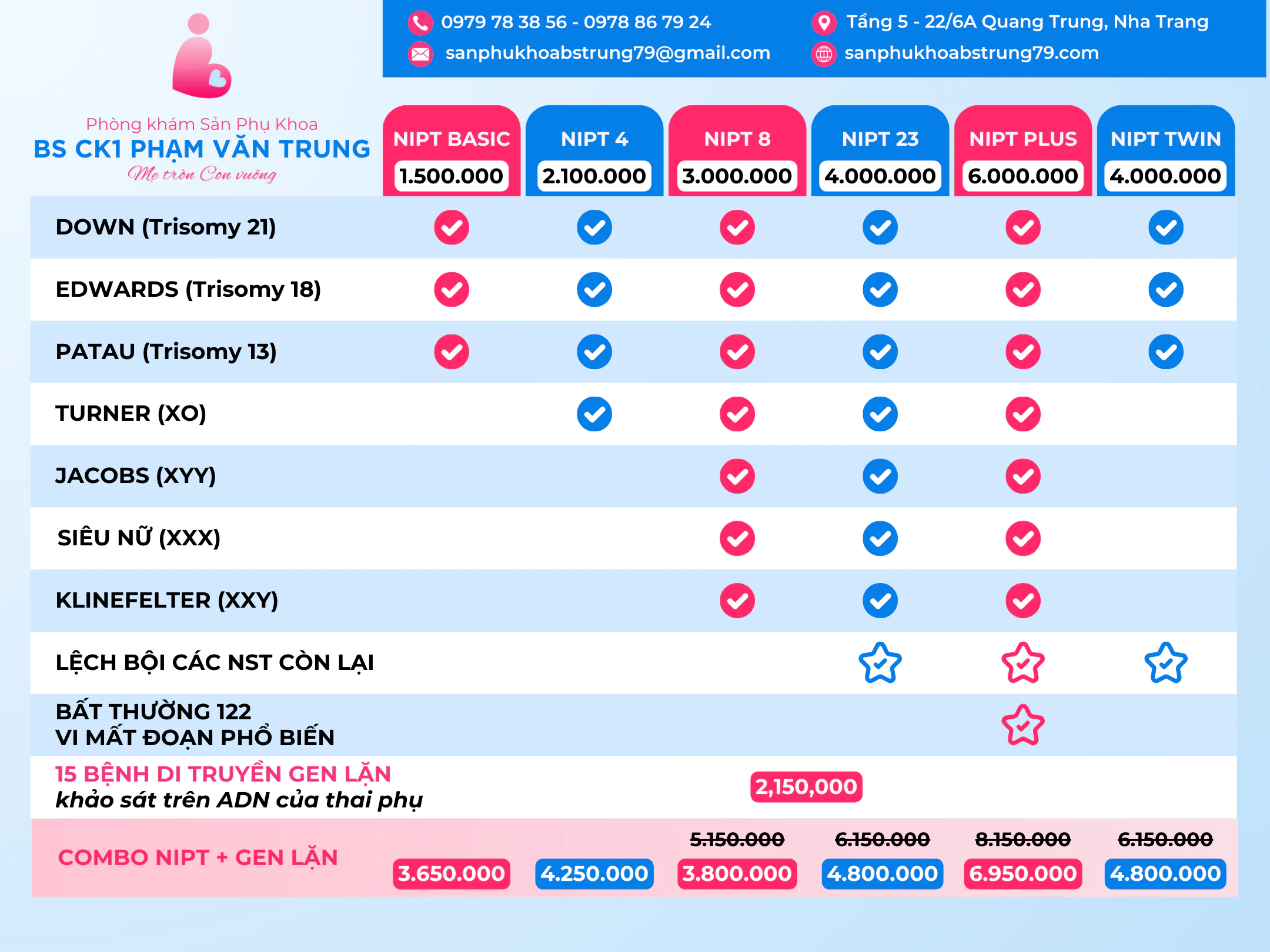
NIPT BASIC1,500,000 VND
- Detects aneuploidy of 3 autosomal chromosome pairs: 13, 18, 21, associated with 3 genetic syndromes: Patau, Edwards, Down.
NIPT 42,100,000 VND
- Detects aneuploidy of 3 autosomal chromosome pairs: 13, 18, 21, associated with 3 genetic syndromes: Patau, Edwards, Down.
- Detects sex chromosome aneuploidy associated with Turner syndrome (XO).
NIPT 83,000,000 VND
- Detects aneuploidy of 3 autosomal chromosome pairs: 13, 18, 21, associated with 3 genetic syndromes: Patau, Edwards, Down.
- Detects sex chromosome aneuploidy associated with Turner (XO), Klinefelter (XXY), Jacobs (XYY) and Triple X (XXX) syndromes.
NIPT 234,000,000 VND
- Detects aneuploidy of 3 autosomal chromosome pairs: 13, 18, 21, associated with 3 genetic syndromes: Patau, Edwards, Down.
- Detects sex chromosome aneuploidy associated with Turner (XO), Klinefelter (XXY), Jacobs (XYY) and Triple X (XXX) syndromes.
- Detects aneuploidy on the remaining 19 chromosome pairs (besides pairs 13, 18, 21 and the sex chromosomes).
NIPT TWIN4,000,000 VND
- Detects aneuploidy of 3 autosomal chromosome pairs: 13, 18, 21, associated with 3 genetic syndromes: Patau, Edwards, Down.
- Detects sex chromosome aneuploidy associated with Turner (XO), Klinefelter (XXY), Jacobs (XYY) and Triple X (XXX) syndromes.
- Detects aneuploidy on the remaining 19 chromosome pairs (besides pairs 13, 18, 21 and the sex chromosomes).
- Reports on 22 autosomes; does not report abnormalities on X, Y. No warranty in cases of vanishing twin.
NIPT PLUS6,000,000 VND
- Detects aneuploidy of 3 autosomal chromosome pairs: 13, 18, 21, associated with 3 genetic syndromes: Patau, Edwards, Down.
- Detects sex chromosome aneuploidy associated with Turner (XO), Klinefelter (XXY), Jacobs (XYY) and Triple X (XXX) syndromes.
- Detects aneuploidy on the remaining 19 chromosome pairs (besides pairs 13, 18, 21 and the sex chromosomes).
- Detects 122 syndromes caused by chromosome deletions/duplications, including DiGeorge (22q11.2); Angelman (15q11); Prader-Willi (15q11); deletion (1p36); Wolf-Hirschhorn (4p); Cri-du-chat (5p)… and other syndromes.
15 recessive genetic diseases2,150,000 VND
- Gene sequencing on the MGI NGS system, screening 15 diseases: Alpha-Thalassemia, Beta-Thalassemia, G6PD deficiency, Phenylketonuria, Galactose metabolism disorders, Cholestatic jaundice due to citrin deficiency, Pompe disease, Wilson disease, Tay-Sachs disease, Type II hyperacidemia, Fabry disease, Male sexual development disorder due to 5α-reductase type 2 deficiency, Cystic fibrosis, Congenital adrenal hyperplasia, Congenital hypothyroidism.
Turnaround time (counted from the sample collection date)
- NIPT: 3 – 5 days
- RECESSIVE GENES: 7 – 10 days
Insurance terms
Insurance period: within 12 months from the date results are delivered.
- Support of 20,000,000 VND if the result is a False negative for Down syndrome (Trisomy 21), Edwards syndrome (Trisomy 18) or Patau syndrome (Trisomy 13) as confirmed by a diagnostic test during pregnancy, applicable to the NIPT BASIC and NIPT 4 packages.
- Support of 30,000,000 VND as above, applicable to the NIPT 7, NIPT 23, NIPT PLUS and NIPT TWIN test packages.
- Immediate compensation of 600,000,000 VND if the result is a False negative as confirmed by a diagnostic test after the baby is born. This includes 200 million for Down syndrome (Trisomy 21), 200 million for Edwards syndrome (Trisomy 18) and 200 million for Patau syndrome (Trisomy 13).
- Support of 2,000,000 – 3,000,000 VND toward the cost of amniocentesis when the result is High risk for Down syndrome, Edwards syndrome and Patau syndrome.
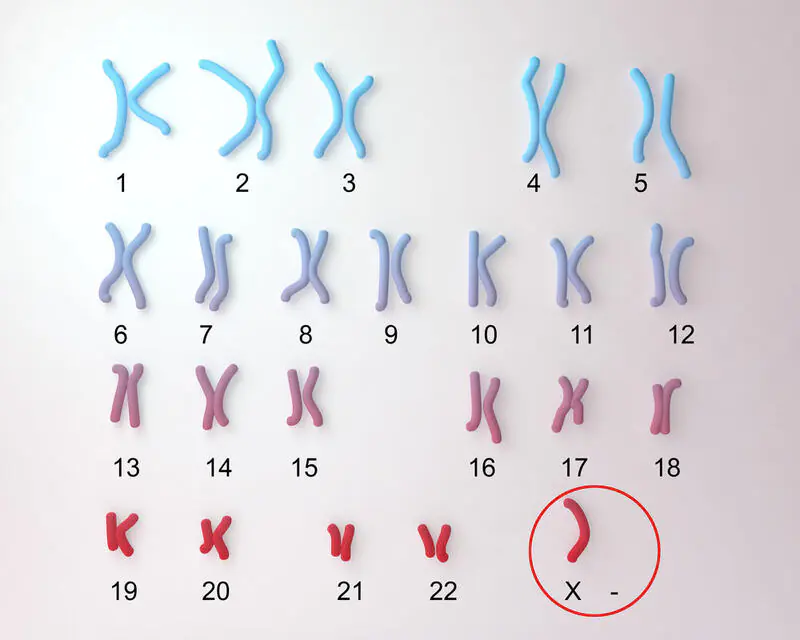
Common chromosomal number abnormalities
DOWN — Trisomy 21
(abnormal when there are 3 copies of chromosome 21 instead of the normal 2) – Flat face (flat nose), upward-slanting eyes, mouth often open with tongue protruding, excess skin at the nape. – Wide, short hands, small and short fingers, big toe set far from the other toes. – Often heart and digestive tract defects, physical and mental developmental delay, ADHD, mostly depression.
EDWARDS — Trisomy 18
(abnormal when there are 3 copies of chromosome 18 instead of the normal 2) – Most die before or right after birth; only about 5-10% survive beyond 1 year. – Babies are usually low birth weight, premature, with a deformed head (long skull, low-set ears, narrow eye openings, small mouth, small jaw…), clenched hands, thick feet, often heart and genital defects.
PATAU — Trisomy 13
(abnormal when there are 3 copies of chromosome 13 instead of the normal 2) – Usually physical and intellectual developmental delay. – Mostly severe congenital heart defects, cleft lip and palate, small eyes set close together, small head, sloping forehead, low-set ears, possible deafness.
TURNER — XO (normal female XX)
– Short, webbed neck with skin folds running down to the shoulders, low-set ears; in adulthood no menstruation, no breast development, infertility.
JACOBS — XYY (normal male XY)
– Large round head, physical and mental developmental delay, autism, depression, language disorders, difficulty controlling emotions and behavior. – Can still have children but with poor sperm quality.
SUPER FEMALE — XXX (normal female XX)
– Wide-set eyes, abnormally curved fingers, flat feet, abnormal breastbone. – Mental developmental delay, poor motor skills, frequent anxiety and depression. – Kidney and heart defects, ovarian failure.
KLINEFELTER — XXY (normal male XY)
– Increased height but disproportionately long arms and legs, language disorders. – Reduced male characteristics (sparse beard, small testes, low male hormone). – Increased female characteristics (enlarged breasts, reduced muscle mass, follicle-stimulating hormone found in urine).
Research on NIPT
Birth defects are a global problem that seriously affects quality of life. Among the known causes, fetal chromosomal abnormalities occur in about 1 in 150 live births and are one of the leading causes of death and disease in newborns worldwide. About 83.0% of these abnormalities are caused by trisomy 21, 18, 13 and sex chromosome aneuploidy, leading to Down, Edwards, Patau, Turner syndromes… Traditional prenatal screening methods for detecting chromosomal aneuploidy include fetal morphology ultrasound and maternal serum analysis in the first and second trimesters (Double Test, Triple Test…). The detection rate for chromosomal abnormalities ranges from 50% to 95% with a false-positive rate of about 5.0% depending on the screening method used. For a definitive diagnosis, pregnant women at high risk of chromosomal abnormalities undergo invasive procedures such as chorionic villus sampling (placenta) or amniocentesis to examine the chromosome count using Karyotype, QF-PCR, FISH, Prenatal BoBs and MLPA techniques. These invasive procedures can cause miscarriage at a rate of 0.11% – 0.22%. Therefore, there is a strong need for screening methods with a low false-positive rate and a higher, more accurate detection rate of chromosomal abnormalities, so that pregnant women do not have to undergo invasive procedures and avoid risks to mother and baby. In recent years, non-invasive prenatal DNA screening (NIPT) has been a major advance in prenatal screening, allowing screening at an earlier time and reducing the risk of miscarriage from invasive procedures. NIPT is a test that analyzes the baby’s cell-free DNA in the mother’s blood to screen for chromosomal aneuploidy by using next-generation sequencing technology (Next Generation Sequencing – NGS), which has been proven to be an effective prenatal screening method compared with traditional ones, with a high chromosomal abnormality detection rate of 91.0% to 99.2% and a low false-positive rate of 0.09% to 0.13%.
NIPT study results
Reasons for testing
| Reason for testing | Number of pregnant women | Rate |
|---|---|---|
| Chose NIPT as the test from the start | 5,185 | 73.91% |
| Had NIPT after a high-risk maternal serum screening result (Double Test, Triple Test…) | 1,830 | 26.09% |
| TOTAL | 7.015 |
The table above shows that as many as 73.91% of pregnant women chose NIPT as their prenatal screening test from the start, without going through maternal serum screening (Double Test, Triple Test…).
Risk of chromosomal abnormalities in 7015 pregnant women
| Age group (number of pregnant women) | Down | Edwards | Patau |
|---|---|---|---|
| < 20 years (22) | 0 (0.0%) | 0 (0.0%) | 0 (0.0%) |
| 21-25 years (467) | 2 (0.43%) | 2 (0.43%) | 1 (0.21%) |
| 26-30 years (1837) | 18 (0.98%) | 3 (0.16%) | 4 (0.22%) |
| 31-35 years (1901) | 20 (1.05%) | 3 (0.16%) | 2 (0.11%) |
| 36-40 years (1927) | 29 (1.5%) | 4 (0.21%) | 5 (0.26%) |
| 41-45 years (764) | 19 (2.49%) | 3 (0.39%) | 2 (0.26%) |
| 46-50 years (91) | 2 (2.2%) | 2 (2.2%) | 0 (0.0%) |
| >50 years (6) | 0 (0.0%) | 0 (0.0%) | 0 (0.0%) |
| TOTAL (7015 pregnant women) | 90 (1.28%) | 17 (0.24%) | 14 (0.2%) |
Analysis of the results in the table above shows that:
- Pregnant women aged 26 – 40 account for 80.76%.
- Among the abnormalities detected, Down syndrome had the highest rate at 1.28% (90/7015), followed by Edwards syndrome at 0.24% and Patau syndrome at 0.2%. No abnormalities were found in the groups aged <20 and >50.
- For Down syndrome, the rate of abnormal pregnancies increases with maternal age from 21 – 50 years (corresponding to rates of 0.43% – 2.49%).
- For Edwards syndrome, the rate of abnormal pregnancies also tends to increase with maternal age, however the 21 – 26 age group falls outside this trend with a rate of 0.43%, the second highest among the age groups.
- The rate of Patau syndrome does not increase with maternal age.
Risk of chromosomal abnormalities in 1830 pregnant women who had NIPT after a high-risk maternal serum screening result
Note: 1830 pregnant women underwent maternal serum screening (Double Test, Triple Test..) with high-risk results, and then had NIPT.
| Age group (number of pregnant women) | Down | Edwards | Patau |
|---|---|---|---|
| < 20 years (5) | 0 (0.0%) | 0 (0.0%) | 0 (0.0%) |
| 21-25 years (99) | 0 (0.0%) | 2 (2.02%) | 0 (0.0%) |
| 26-30 years (455) | 6 (1.32%) | 1 (0.22%) | 2 (0.44%) |
| 31-35 years (539) | 9 (1.67%) | 0 (0.0%) | 0 (0.0%) |
| 36-40 years (527) | 3 (0.57%) | 1 (0.19%) | 2 (0.38%) |
| 41-45 years (188) | 4 (2.13%) | 1 (0.53%) | 0 (0.0%) |
| 46-50 years (17) | 0 (0.0%) | 1 (5.88%) | 0 (0.0%) |
| >50 years (0) | 0 (0.0%) | 0 (0.0%) | 0 (0.0%) |
| TOTAL (1830 pregnant women) | 22 (1.2%) | 6 (0.33%) | 4 (0.22%) |
Analysis of the results in the table above shows that:
- A total of 1830 pregnant women underwent maternal serum screening with a high-risk result before NIPT screening, of whom 83.11% were aged 26-40.
- Among the abnormalities detected, Down syndrome had the highest rate at 1.2% (22/1830), followed by Edwards syndrome at 0.33% and Patau syndrome at 0.22%. No abnormalities were found in the groups aged <20 and >50.
- The total number of fetuses with chromosomal abnormalities detected through NIPT screening among 1830 cases with positive serum screening was 32.
- According to ACOG (American College of Obstetricians and Gynecologists), the NIPT prenatal screening test is better than serum screening tests because of its high detection rate and low false-positive rate.
- Thus, the complementary NIPT results help reduce the number of pregnant women who must undergo invasive prenatal diagnosis such as amniocentesis or placental sampling by 98.25%, for pregnant women as well as clinicians…
NIPT recommendations
Who should have the NIPT prenatal screening test?
- Pregnant women at least 9 weeks pregnant, with singleton/twin pregnancies. Pregnancies conceived naturally or with IUI/IVF assisted methods.
- The fetus shows abnormal signs on ultrasound.
- Expectant mothers who have had an ultrasound and whose Double test/Triple test (Combined test) screening results show intermediate to high risk.
- Pregnant women of advanced age, over 35 years.
- Women with a history of stillbirth, miscarriage, or giving birth to a child with a defect.
- Pregnant women with a history of a child with a trisomy-type genetic disorder.
- Families of pregnant women with a member who has a chromosome-related genetic disease.
- Before undergoing invasive diagnostic tests such as amniocentesis or chorionic villus sampling… as these procedures can cause miscarriage with a low risk.
Cases in which NIPT should not be performed
- Pregnant women carrying triplets or more.
- Pregnant women being treated for cancer or immune-related conditions.
- Pregnant women taking certain blood thinners, or receiving blood transfusions / organ transplants such as liver, kidney, bone marrow, stem cells, … (NIPT may be done after 1 year of treatment and when the interval from the vanishing twin to the NIPT test is >8 weeks).
- Pregnant women who are obese with a high BMI.
- Pregnancies from donor eggs / surrogate mothers.
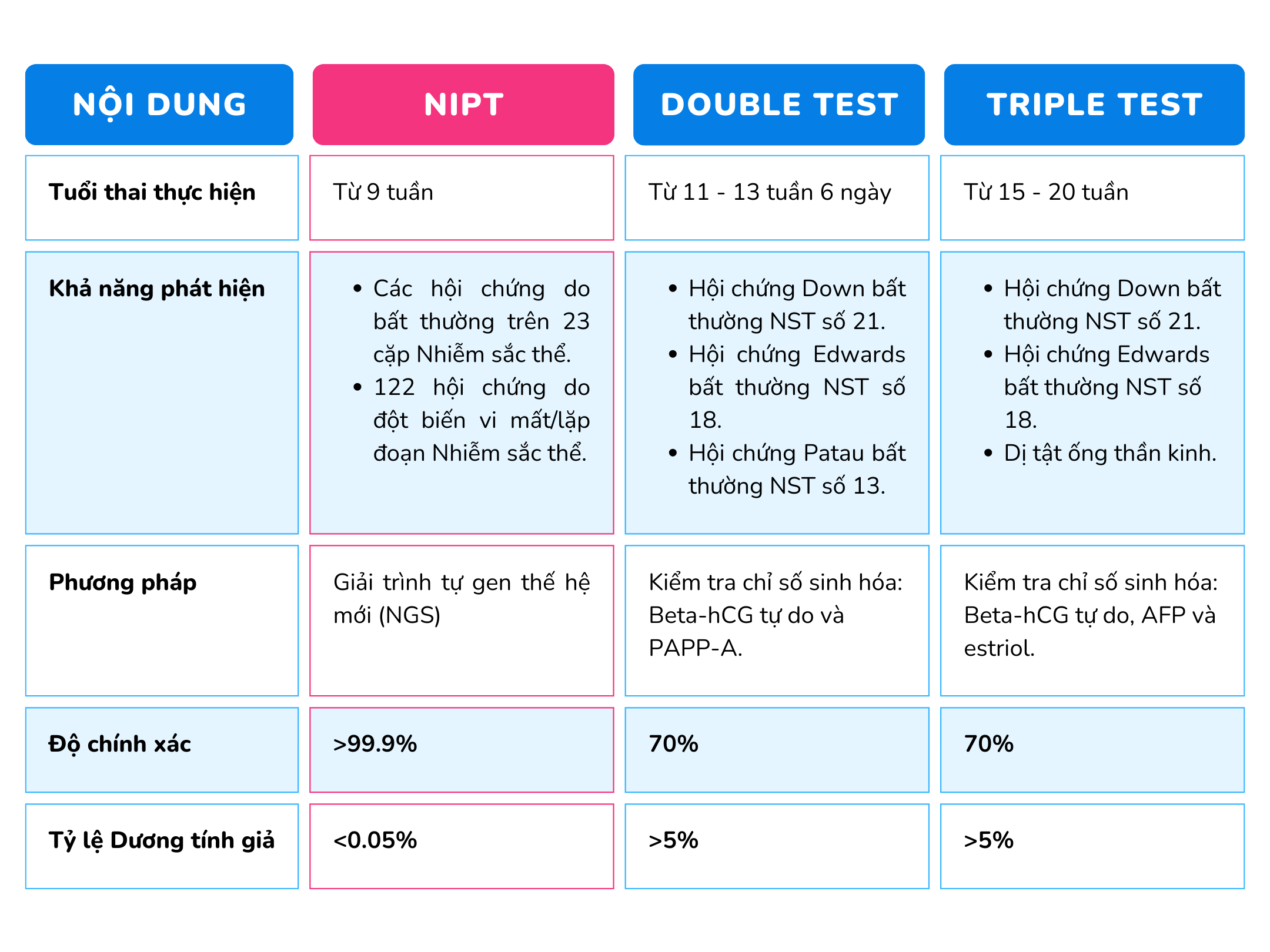
Comparing NIPT and Double Test/Triple Test
Why choose Dr. Trung’s Clinic for prenatal screening?
Accurate & reliable
Proprietary technology from the USA delivers accuracy of up to 99.99%.
Fast
Results in 3 – 5 days.
Companionship throughout pregnancy
Free NIPT consultation in Nha Trang by Dr. PHAM VAN TRUNG (Specialist Level 1) and highly qualified geneticists.
Insurance
False negative: support of up to 600 million VND. Positive: support for amniocentesis costs and extended tests.